
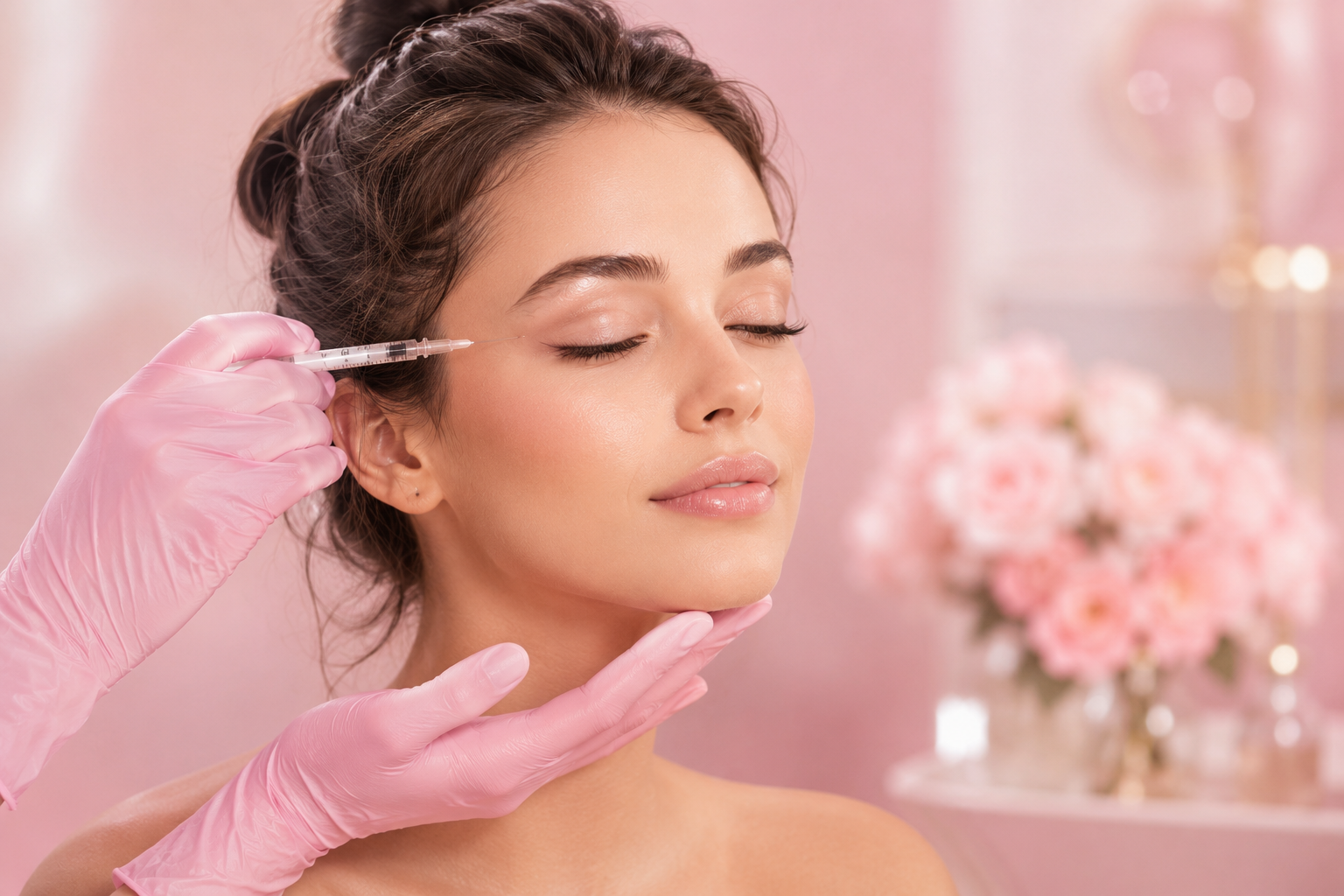
Baby Botox is a lower-dose version of traditional Botox that uses smaller amounts of neurotoxin (usually 10 to 30 units total) placed in more precise locations across the face. The goal is to soften fine lines and prevent new wrinkles without freezing facial expression. Popular with patients in their late 20s and 30s, Baby Botox delivers a subtle, natural refresh rather than a full smoothing effect, and results typically last two to three months.
If you’ve been scrolling through TikTok or Instagram and keep seeing the term, you’re not imagining a trend. Baby Botox has become the go-to entry point for people who want the benefits of neuromodulators without looking like they’ve had anything done. Let’s break down everything you actually need to know before booking.
What Is Baby Botox and How Is It Different?
Baby Botox uses the same FDA-approved neurotoxin as regular Botox (typically Botox Cosmetic, Dysport, or Xeomin), but the technique changes everything. Instead of injecting standard doses into a few key muscles, your provider uses micro-doses spread across more injection points. The result is muscle relaxation without paralysis. You still move your face. You still express emotion. You just don’t crease as deeply when you do.
Think of it like turning down the volume rather than hitting mute.
What Is Considered Baby Botox?
Any treatment that uses roughly half the standard dose in a treatment area falls under the Baby Botox umbrella. For context, a traditional forehead treatment might use 20 units. Baby Botox for the same area often uses 8 to 12. The exact number depends on your muscle strength, facial anatomy, and what you’re trying to achieve.
What Is the Difference Between Botox and Baby Botox?
The product is identical. The strategy is different. Traditional Botox aims for maximum wrinkle reduction and lasts three to four months. Baby Botox aims for softness and prevention, and typically wears off around the 8 to 10 week mark. If you’re someone who wants a “wow, you look rested” comment rather than a “your forehead doesn’t move” observation, Baby Botox is usually the better fit.
What Is Baby Botox vs Botox for First-Timers?
For a first-timer, Baby Botox is often the smarter starting point. You get to see how your face responds to neurotoxin without committing to a fully frozen look. If you love the result and want more, your next session can go slightly stronger. Going too heavy on your first appointment is much harder to walk back once it settles. If you want a broader look at aesthetic options, our guide on what is plastic surgery covers surgical alternatives worth understanding.
Does Minimal Botox and Baby Botox Mean the Same Thing?
Pretty much yes. “Minimal Botox,” “micro-Botox,” “mini Botox,” and “Baby Botox” all describe the same underlying idea: smaller doses spread thinly across the treatment area. Some clinics use these terms interchangeably. Others make small technical distinctions, like reserving “micro-Botox” for intradermal (very shallow) injections rather than intramuscular ones. When you book, ask your provider exactly what technique they’re using.
How Many Units for Baby Botox?
Baby Botox typically uses 10 to 30 units total across the upper face. That’s roughly half of what a standard treatment would require. The forehead, glabella (the “11” lines between your brows), and crow’s feet are the most common target zones.
How Many Units Baby Botox for Full Upper Face?
For a full upper-face Baby Botox treatment covering forehead, glabella, and crow’s feet, most patients use somewhere between 20 and 30 units combined. Your provider will divide those units across multiple micro-injection points rather than clustering them at just a few sites.
How Many Units of Botox for Baby Botox by Area
Here’s a general breakdown, though your actual dosing may vary based on muscle strength:
- Forehead: 4 to 8 units
- Glabella (11 lines): 6 to 10 units
- Crow’s feet: 4 to 8 units per side
- Lip flip: 2 to 4 units
- Bunny lines (nose): 2 to 4 units
How Many Units for Baby Botox If You Have Strong Muscles?
If you’re someone with expressive brows or a strong forehead, you may sit at the higher end of Baby Botox dosing (25 to 30 units) or benefit more from traditional dosing. This is a conversation to have with your injector, not a decision to make from a TikTok video.
How Many Units Is Baby Botox in the Forehead?
For the forehead specifically, Baby Botox usually lands around 4 to 8 units. That’s noticeably lower than the standard 10 to 20 units used for full forehead relaxation. The lower dose keeps some natural movement in the forehead and reduces the risk of brow heaviness, which is a common complaint with over-dosed forehead treatments.
How Long Does Baby Botox Last?
Baby Botox typically lasts 8 to 12 weeks, which is about half the duration of traditional Botox. That shorter timeline is the trade-off for a lighter, more natural result. Most patients who commit to Baby Botox come in four to six times per year rather than the standard three to four visits.
How Often to Get Baby Botox?
Every 8 to 10 weeks is the sweet spot for most patients. Going too often risks resistance (your body developing antibodies to the neurotoxin). Waiting too long means your muscles fully return to baseline, and the “prevention” benefit resets. Consistency is what makes Baby Botox work long-term as an anti-aging strategy.
How Much Is Baby Botox?
Baby Botox typically costs between $200 and $600 per session, depending on your location, provider expertise, and total units used. Since Baby Botox uses fewer units than traditional treatments, the per-session cost is often lower, though the more frequent schedule can even things out over a year. If you’re budgeting for aesthetic care overall, our overview of how much Botox costs covers standard pricing, and our plastic surgery cost guide puts injectables in context with other procedures.
How Much Does Baby Botox Cost by Region?
Costs run higher in major metros like Los Angeles, New York and Miami (often $500 to $800 per session) and lower in mid-sized markets across Texas and the Midwest (often $250 to $450 per session). Per-unit pricing typically ranges from $10 to $18. Watch out for pricing that’s suspiciously low. Cut-rate Botox is often diluted, expired, or administered by someone without proper training.
How Much Is Baby Botox in the Forehead?
Forehead-only Baby Botox usually runs $80 to $160 per session, based on 4 to 8 units at $10 to $18 per unit. It’s often the most affordable entry point into injectables. Just remember that treating only the forehead can occasionally cause brows to drop if the glabella isn’t balanced, so many providers won’t do isolated forehead treatments.
How Much Does Baby Botox Cost in the Forehead Long-Term?
Over a year, forehead Baby Botox typically runs $500 to $900 if you’re getting treated every 8 to 10 weeks. Compared to more involved treatments like a facelift or face fillers, it’s a lower-cost, lower-commitment approach to aging prevention.
Is Baby Botox Worth It?
Baby Botox is worth it if you want a natural, expression-preserving refresh and are willing to commit to treatments every 8 to 10 weeks. It’s especially worth it as a preventative strategy in your late 20s and early 30s, when starting early can slow the formation of deeper set-in lines. It’s less worth it if you already have deep static wrinkles, because the lower dose won’t fully address them. In that case, traditional Botox or a combination with derma fillers makes more sense.
If you’re exploring newer trends, you might also want to read about Barbie Botox for the trapezius muscles or check our PRF treatment guide for regenerative options.
What to Expect During and After a Baby Botox Session
Sessions take 15 to 30 minutes. Your provider will clean the injection sites, mark the target zones, and use a very fine needle to deliver the micro-doses. Discomfort is minimal, comparable to tiny pinches. There’s no downtime, though you should avoid lying flat, working out, or rubbing your face for four hours afterward. Results start showing at day 3, peak around day 14, and gradually fade over the next two to three months.
Common side effects include mild redness, small bumps at injection sites (they fade within an hour), occasional bruising, and rarely, temporary asymmetry or brow heaviness. Choosing an experienced injector significantly reduces these risks.
Ready to Try Baby Botox?
If you’re thinking about your first Baby Botox appointment, or you’re switching from traditional Botox because your last result felt too heavy, the right injector makes all the difference. Our team at BodEvolve Cosmetic sees patients across Arlington,Richardson,Dallas, and Texarkana, and we’ll give you an honest read on whether Baby Botox, standard Botox, or a combination approach fits your face and your goals. Book a consultation when you’re ready.
