
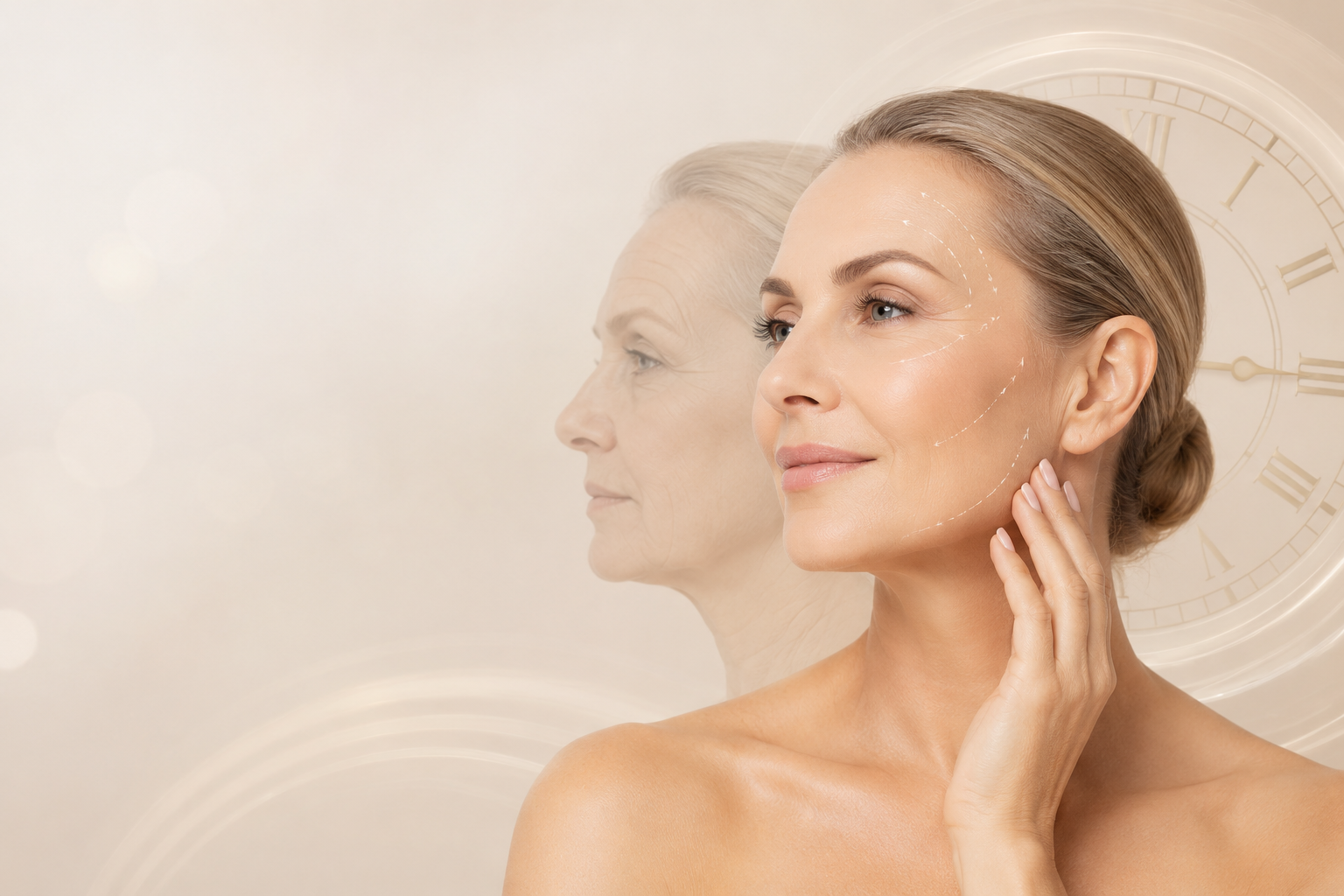
How long does a facelift last is one of the first questions patients ask before booking a consultation and the honest answer depends on the technique your surgeon uses, your age at surgery, and how you care for your skin afterward. On average, a traditional surgical facelift lasts 10 to 15 years, a deep plane facelift can hold for up to 15 years, and non-surgical options like fillers or threads typically last 6 months to 2 years. Your genetics, sun exposure, weight changes, and skincare habits all influence how long the results stay visible.
What “Lasting” Actually Means After a Facelift
A facelift does not stop the aging process. It resets the clock. Your skin, muscles, and fat pads continue to age from the day of surgery, but they age from a younger baseline. So even 10 years after the procedure, most patients still look years younger than they would have without it.
There is a common misconception that once results “wear off,” your face goes back to how it looked before surgery. That is not accurate. The structural changes made during a deep plane or SMAS lift are permanent. What changes is the surface. Skin quality, volume loss, and jawline sharpness gradually shift again over the years.
How Long Does a Facelift Last by Type
Different facelift techniques address different layers of the face, and that directly affects longevity.
Traditional or Full Facelift
A full facelift addresses the mid-face, jawline, and neck by lifting deeper tissues along with the skin. Results typically last 10 to 15 years. This is the most durable surgical option for patients with significant sagging.
SMAS Facelift
The SMAS (superficial musculoaponeurotic system) facelift tightens the layer of muscle and connective tissue beneath the skin. Results generally last 10 to 12 years. It is one of the most commonly performed techniques in the United States.
Deep Plane Facelift
A deep plane facelift releases key ligaments and repositions tissue as a single unit. Because it works below the SMAS layer, results are often the longest lasting of any facelift, holding for 12 to 15 years or more. Recovery is longer, but the payoff is durability.
Mini Facelift
A mini facelift uses shorter incisions and focuses on the lower face and jawline. It is best suited for patients in their 40s or early 50s with mild to moderate sagging. Results last around 5 to 10 years, which is shorter because less tissue is repositioned.
MACS Facelift
The MACS (Minimal Access Cranial Suspension) lift is a modified short-scar technique. It typically lasts 8 to 10 years and is a popular middle ground between a mini and full lift.
Lower Facelift
A lower facelift targets the jawline, jowls, and upper neck without touching the mid-face. Results usually hold for 7 to 10 years, depending on skin quality and age.
Ponytail Facelift
The ponytail facelift is a marketing term for a minimally invasive lift that mimics the pulled-back look of a high ponytail. Results last 3 to 5 years because it does not reposition deeper tissue.
Thread Facelift
A thread lift uses dissolvable sutures to reposition tissue temporarily. Results are visible for 1 to 3 years at most, and often less. It is not a substitute for surgery.
Liquid or Filler Facelift
A liquid facelift uses dermal fillers like hyaluronic acid or Sculptra to restore lost volume. Results last 6 months to 2 years depending on the product used. Sculptra tends to last the longest.
Vampire Facelift
A vampire facelift combines fillers with platelet-rich plasma (PRP) injections. Results generally last 12 to 18 months and require maintenance sessions.
Laser Facelift
A laser facelift is not a lift at all. It resurfaces the skin. Results depend on the depth of the treatment and last 1 to 5 years.
Non-Surgical Facelift
The umbrella term “non-surgical facelift” covers Ultherapy, Morpheus8, radiofrequency, and similar tightening treatments. Results generally last 1 to 2 years with maintenance.
What Affects How Long Your Facelift Lasts
The technique matters, but so do these factors.
Your age at the time of surgery:
Patients who have surgery in their late 40s or 50s often enjoy longer-lasting results than those who wait until their 70s. Younger tissue holds its new position better.
Skin quality and elasticity:
Thicker, well-hydrated skin with good collagen holds surgical results better than thin, sun-damaged skin.
Sun exposure:
UV damage breaks down collagen and elastin. Consistent SPF use is the single most powerful thing you can do to protect your investment.
Weight fluctuations:
Losing or gaining more than 15 pounds after a facelift changes how your skin drapes and can shorten the visible longevity of the result.
Smoking:
Smoking reduces blood flow, slows healing, and accelerates skin aging. Surgeons often ask patients to quit for weeks before and after surgery.
Skincare routine:
Prescription retinoids, antioxidants, and professional treatments like microneedling help maintain the surface quality of the skin.
Your surgeon’s technique:
A deep plane or extended SMAS lift performed by an experienced surgeon lasts longer than a skin-only tightening procedure.
How Long Does Swelling Last After a Facelift
Swelling is heaviest during the first week and drops significantly by the two-week mark. Most patients feel comfortable returning to social activities after 10 to 14 days. However, subtle residual swelling can linger for 3 to 6 months, and the final refined result often shows up around the 6-month point. Deep plane and extended lifts tend to have longer swelling timelines than mini lifts.
Lymphatic drainage massage, sleeping elevated, and avoiding salt can help reduce puffiness during recovery. If you want a fuller picture of how manual techniques speed recovery, this guide on lymphatic drainage massage walks through it in detail.
How to Make Your Facelift Last Longer
The single biggest predictor of longevity after the surgery itself is what you do in the years that follow.
Wear broad-spectrum SPF 30 or higher every day. Use a prescription retinoid or a strong retinol. Stay hydrated. Sleep on your back when possible. Do not crash diet. Consider maintenance treatments like Botox to relax dynamic wrinkles, or fillers to replace volume that naturally decreases with age. Many patients ask about the price of these top-ups, and this breakdown of how much is Botox covers current pricing and treatment intervals.
Some patients also pair their facelift with other longevity-focused procedures. If you are curious how surgical results in other areas compare, our patients often read how long does a tummy tuck last and how long do breast implants last to get a sense of what to expect long term across body contouring procedures. For cost planning, the guide on how much does plastic surgery cost is a helpful starting point.
Signs You May Need a Revision or Touch-Up
Most patients never need a full second facelift. Instead, they benefit from smaller maintenance procedures around the 8 to 12 year mark. Signs that a touch-up may be worth discussing include softening of the jawline, mild jowling, deeper folds near the mouth, or loss of neck definition. A shorter-scar mini lift or a targeted neck lift is often enough to refresh the original result.
Ready to Explore Your Facelift Options in Texas
Every face ages differently, and the right technique for you depends on your anatomy, your goals, and how much downtime you can commit to. Dr. Clayton Frenzel and Dr. Brian Holt are triple board-certified surgeons who perform deep plane, SMAS, mini, and lower facelifts across our locations in Arlington, Richardson, Dallas and Texarkana. Schedule a consultation to find out which facelift technique will give you the longest-lasting, most natural result for your face.
Frequently Asked Questions
What is the best age to get a facelift?
Most surgeons agree the sweet spot is between 45 and 60. Tissues are still elastic enough to hold the lift well, and results tend to last longer than surgery performed later in life. That said, healthy patients in their 60s and 70s can still see excellent results.
What are the downsides of a face lift?
The main downsides are cost, downtime of 2 to 3 weeks, and the small risks that come with any surgery, including bruising, nerve irritation, scarring, and rare complications like hematoma. Non-permanent numbness in the ears or cheeks can also occur.
Is getting a face lift worth it?
For most patients with moderate to significant facial aging, a facelift delivers the most dramatic and long-lasting improvement of any option. Patient satisfaction rates in peer-reviewed studies are consistently above 90 percent when the procedure is performed by an experienced surgeon.
Does skin age faster after a facelift?
No. This is a persistent myth. Your skin continues aging at the same rate it would have without surgery. You simply start from a younger-looking baseline, which is why the results still look natural years later.
