
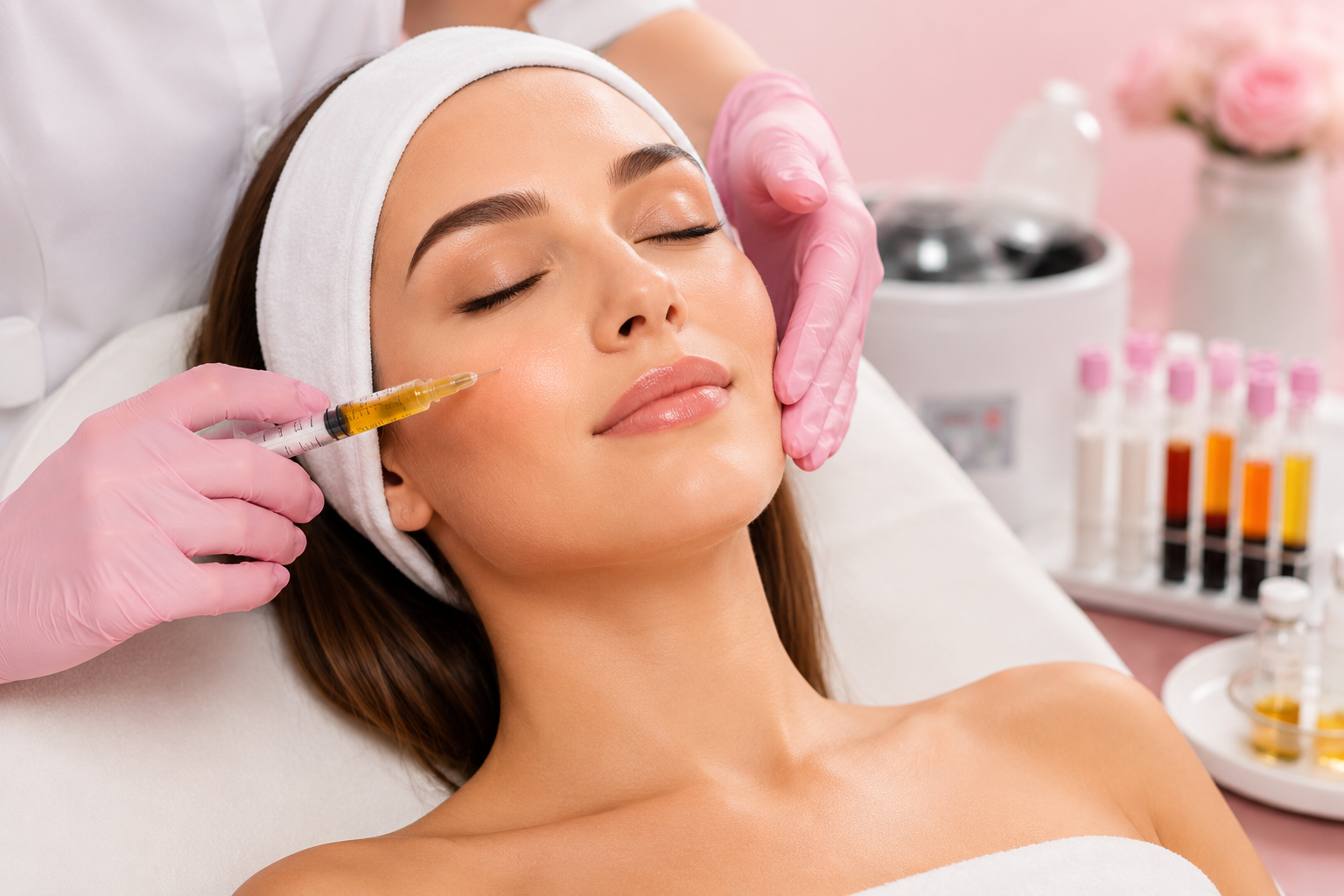
PRF treatment is a regenerative therapy that uses your own blood to stimulate collagen production, tissue repair, and natural healing. Short for platelet-rich fibrin, PRF is drawn from a small blood sample, spun at a low speed in a centrifuge, and injected or applied to areas like the face, under eyes, scalp, or gums. Because it contains no anticoagulants and no additives, it’s considered a fully autologous, all-natural treatment used in aesthetic medicine, hair restoration, and dentistry.
If you’ve been hearing more about PRF over PRP lately, there’s a reason. The science moved forward, and PRF is what came out of that shift. Let’s walk through the whole thing.
What Is PRF Treatment and How Does It Work?
PRF works by concentrating the healing components of your own blood and releasing them slowly into the treated area. When your provider draws blood and spins it at a low, gentle speed, the result is a fibrin-rich matrix packed with platelets, white blood cells, and stem cells. That matrix acts like a slow-release scaffold, delivering growth factors into your tissue for days rather than hours. Over the following weeks, your body responds by producing new collagen, forming new blood vessels, and repairing damaged tissue.
What Is a PRF Treatment Session Actually Like?
A session usually takes about 30 to 60 minutes. Blood is drawn from your arm just like a routine lab test, spun in a centrifuge, and then injected using a fine needle or cannula. There’s minimal downtime, mild swelling for a day or two, and no need for general anesthesia. Most people head back to work the next day.
What Is the PRF Treatment Timeline for Results?
You won’t see results overnight. That’s the honest truth. Initial improvements show up around the two to four week mark, and full results build over three to six months as collagen remodeling continues. Most patients do a series of three sessions spaced four to six weeks apart for the best outcome.
What Is PRP and PRF Treatment? A Simple Breakdown
Both PRP (platelet-rich plasma) and PRF are drawn from your own blood, but they’re processed differently. PRP uses a higher spin speed and anticoagulants, giving you a liquid concentrate that releases growth factors quickly. PRF uses a slower spin, no additives, and produces a gel-like matrix that releases growth factors gradually over seven to ten days.
What Is PRP PRF Treatment Best For?
Think of PRP as the sprinter and PRF as the marathon runner. PRP works well for quick boosts and combined treatments with microneedling. PRF suits deeper regeneration, thin under-eye skin, and long-term tissue building because the fibrin scaffold keeps the growth factors working longer.
What Is the Difference Between PRP and PRF Treatment?
The main differences come down to three things: additives, spin speed, and release pattern. PRP contains anticoagulants and spins fast. PRF is additive-free, spins slowly, and forms a natural fibrin clot that holds platelets in place. PRF also contains more white blood cells and stem cells, which is why many providers now prefer it for delicate zones like the tear trough.
What Is PRF Under Eye Treatment?
PRF under eye treatment addresses hollowness, dark circles, and crepey skin in the tear trough area without the risk profile of hyaluronic acid fillers. The gel-like consistency of PRF settles smoothly under thin under-eye skin, then slowly stimulates new collagen and vascular growth. You end up brightening the area from within rather than filling it from outside.
What Is PRF Treatment for Under Eyes: Who Is a Good Candidate?
Good candidates are people bothered by dark circles, mild hollowing, or thin under-eye skin who want something natural. It’s especially useful if you’ve had a bad reaction to filler before or if you want to avoid the puffy, blueish tint that filler can sometimes cause under the eyes (the Tyndall effect). If you’re weighing surgical options too, our guide on how much plastic surgery for eyelids costs is worth reading alongside this.
What Is PRF Treatment Under Eyes Recovery Like?
Recovery is gentle. Expect mild bruising, some yellowing (that’s the PRF itself, not a bruise), and swelling for two to four days. Sleeping slightly elevated helps. Avoid rubbing the area, skip the gym for 24 hours, and don’t schedule this a week before a big event.
What Is Under Eye PRF Treatment vs Filler?
Filler adds volume immediately. PRF builds tissue gradually. Filler lasts nine to twelve months on average. PRF results build over months and can last a year or longer as the collagen you grew is truly yours. Some patients combine both, using a small amount of filler for structure and PRF for skin quality.
What Is PRF Treatment for Face?
PRF treatment for the face is a full-face rejuvenation option that works on fine lines, texture, acne scars, dull skin, and volume loss. It’s often paired with microneedling to open channels for topical PRF absorption, or injected into deeper zones for structural support. Because it stimulates your own biology, results look like you, just fresher. If you want a broader overview of aesthetic options, our pillar guide on what is plastic surgery covers surgical alternatives.
What Is PRF Skin Treatment?
PRF skin treatment improves overall skin quality: elasticity, tone, texture, and pore size. It pairs well with in-office procedures like Morpheus8 or CO2 laser resurfacing because the growth factors accelerate healing after energy-based treatments. Many patients add PRF into their routine alongside Botox and derma fillers for a complete rejuvenation plan.
What Is PRF Skin Rejuvenation Treatment?
PRF skin rejuvenation is really about biology, not cosmetics. You’re not covering up aging. You’re triggering your skin’s own repair mechanisms. Over a series of sessions, patients report firmer skin, brighter complexion, and softened lines. It works especially well as a maintenance treatment between more aggressive procedures like laser resurfacing.
What Is PRF Hair Restoration Treatment?
PRF hair restoration is used to slow hair loss and stimulate regrowth by injecting PRF into the scalp at the level of the hair follicles. The growth factors wake up dormant follicles, improve blood supply, and thicken existing strands. Results start around the three-month mark, with peak improvement between six and nine months.
What Is PRF Hair Treatment Frequency?
A typical protocol involves three initial sessions spaced four to six weeks apart, then maintenance every four to six months. Consistency matters. Skipping the follow-ups is where most patients lose their gains.
What Is PRF Treatment for Hair Growth?
PRF for hair growth stimulates the anagen (growth) phase of your hair cycle. It also increases blood vessel formation around the follicle, meaning better nutrient delivery. Combined with medical therapies like finasteride or minoxidil, PRF can significantly boost outcomes for early-to-moderate hair thinning.
What Is PRF Treatment for Hair Loss? Who Should Consider It?
PRF works best for androgenetic alopecia (pattern hair loss) caught early, telogen effluvium, and stress-related shedding. Patients with completely bald areas won’t get regrowth because the follicles are gone. If you’ve been noticing your part widening or your ponytail thinning, that’s the window where PRF delivers the biggest impact.
What Is Hair PRF Treatment Aftercare?
Skip washing your hair for 24 hours, avoid intense workouts for 48 hours, no swimming or saunas for a week, and no hair color for at least a week. Some tenderness at the injection sites is normal. Consistent aftercare is what protects the growth factors while they’re doing their job.
What Is the Cost of PRF Hair Restoration Treatments?
The cost of PRF hair restoration typically runs between $500 and $1,500 per session, with most patients needing three initial sessions plus maintenance. Prices vary based on scalp size, provider expertise, and geographic location. Financing options often apply, and if you’re budgeting for aesthetic care overall, our breakdown of how much plastic surgery costs gives useful context on what to expect across procedures.
What Is PRF Dental Treatment?
PRF dental treatment uses the same platelet-rich fibrin, but here it’s applied to dental sockets, bone grafts, and implant sites to accelerate healing. Dentists and oral surgeons have used PRF for years to reduce post-extraction pain, minimize dry socket risk, and improve bone regeneration around implants.
What Is PRF Treatment in Dentistry Used For?
In dentistry, PRF is placed directly into extraction sites, used as a membrane in guided bone regeneration, and mixed with bone grafts to speed integration. It reduces the healing timeline, cuts down on inflammation, and improves outcomes for implant procedures. Patients often report less pain in the days after surgery when PRF is used.
Is PRF Treatment Safe?
Yes, generally. Because PRF uses your own blood with no additives, allergic reaction is essentially not possible. The most common side effects are mild bruising, swelling, tenderness, and temporary yellowing at injection sites. Serious complications are rare when performed by trained providers using sterile techniques.
Ready to See If PRF Is Right for You?
If you’re curious whether PRF fits your skin, hair, or overall aesthetic goals, the best next step is a real consultation with a provider who understands regenerative medicine and won’t oversell you on results. Our team at BodEvolve Cosmetic sees patients across Arlington, Richardson, Dallas, and Texarkana, and we’ll give you an honest read on whether PRF, filler, surgery, or a combination is right for you.
