
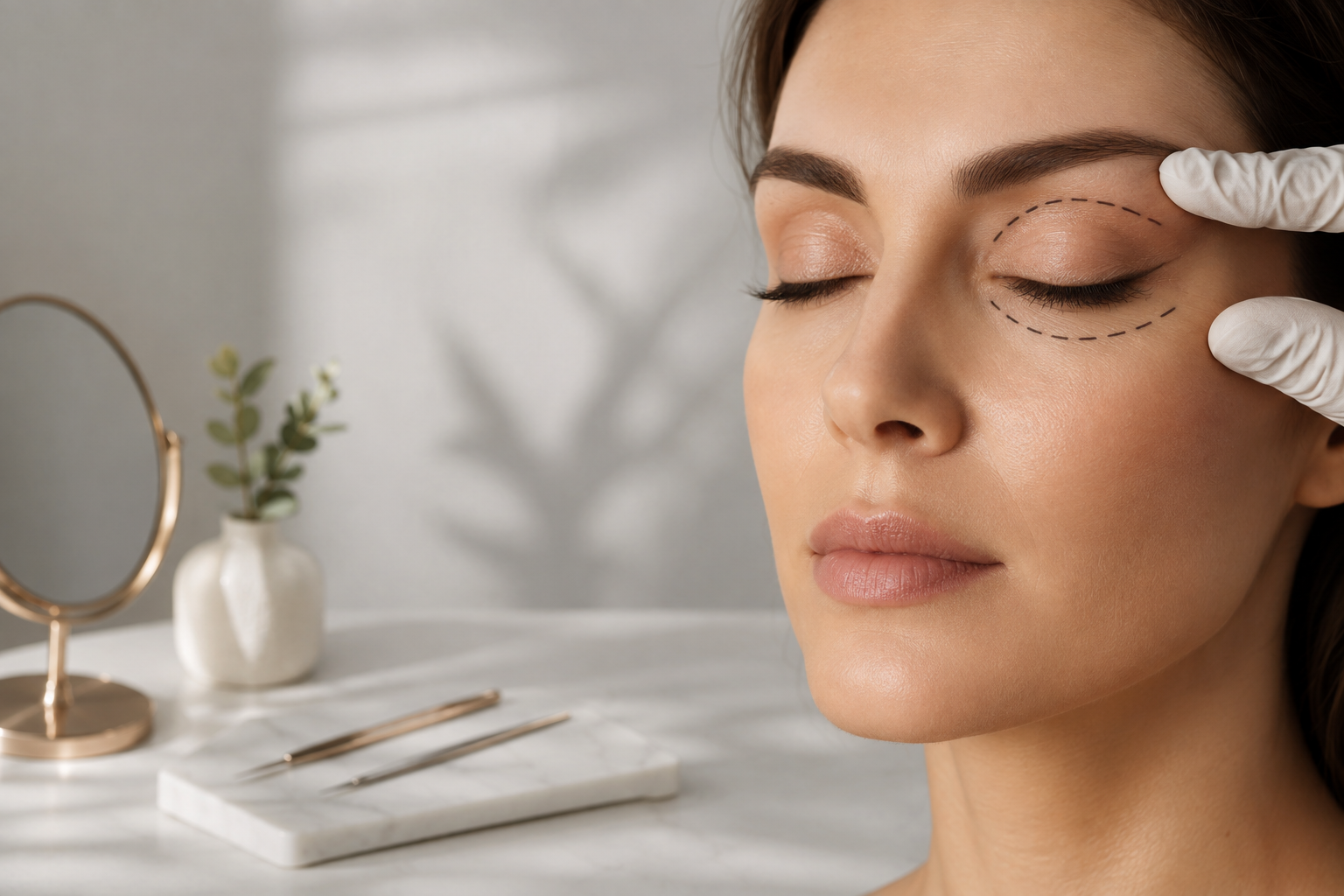
How much is plastic surgery for eyelids is one of the first questions patients ask when they finally book that consultation, and it deserves a straight answer instead of a vague brochure quote. If people keep asking whether you’re tired, upset, or just not sleeping well when you actually feel fine, you already know why so many patients start looking into blepharoplasty. The eyes are usually the first place aging shows up, and no amount of concealer really fixes heavy upper lids or the puffy bags sitting under the lower ones. Most patients in 2026 are paying somewhere between $4,000 and $11,000, depending on which lids get treated and where the surgery happens. That range isn’t a runaround, it’s just the honest truth of how these fees stack up once you count everything in.
What the Average Eyelid Surgery Costs Right Now
Eyelid surgery, medically called blepharoplasty, is priced by which lids you’re treating. Eyelid surgery, medically called blepharoplasty, is priced by which lids you’re treating. Here’s the range most reputable practices are quoting this year:
- Upper blepharoplasty: $4,000 to $6,000
- Lower blepharoplasty: $6,500 to $9,500
- Upper and lower combined: $9,000 to $11,000
For context, the American Society of Plastic Surgeons reports a national surgeon’s fee average of about $3,359 for upper lids and $3,876 for lower lids. That number sounds cheaper, but it’s the surgeon’s fee only. It doesn’t include anesthesia, the operating room, medications, or follow-up visits. Once those get added, the total lands right around the ranges above.
If you’re comparing eyelid surgery to other facial procedures, our guide to how much plastic surgery costs breaks down where blepharoplasty sits alongside options like facelifts and rhinoplasty.
What Makes the Price Move Up or Down
Two patients can walk out with completely different quotes for what looks like the same surgery, and there’s usually a good reason. Here’s what shifts the number:
Which lids you’re treating: Upper lid surgery is the simplest version. Lower lid work is technically harder because the fat pads sit deeper and the risk of a poor outcome is higher, so surgeons price it accordingly. Doing both at once is more efficient than doing them separately, which is why the combined price isn’t quite double.
Surgeon experience: A board-certified plastic surgeon who has done thousands of blepharoplasties is going to charge more than someone just starting out. That gap is worth it. Eyelid tissue is thin, unforgiving, and heals in ways you can’t hide. Overcorrection can leave you with a permanently startled look or dry eyes that won’t close properly. This is not the place to save $1,500.
Technique: Some cases need only a skin trim. Others need fat repositioning, muscle tightening, or a canthopexy to support the lower lid. The more work involved, the higher the surgeon’s fee.
Anesthesia type: Local sedation costs less than full general anesthesia. Your surgeon will pick based on your case, not your budget.
Where you live: Big-city practices with high overhead charge more than smaller markets. A quote in Manhattan won’t match a quote in a mid-size Texas city.
Facility fees: In-house accredited surgery centers usually cost less than renting a hospital OR.
A Real Cost Breakdown
To make this less abstract, here’s how a typical $9,500 upper and lower blepharoplasty at a well-run cosmetic practice tends to shake out:
| Line Item | Typical Range |
| Surgeon’s fee | $5,000 to $7,500 |
| Operating room / facility | $1,400 to $1,800 |
| Anesthesia | $1,000 to $1,300 |
| Pre-op labs and consultation | $150 to $400 |
| Prescriptions and post-op supplies | $80 to $200 |
Notice there’s no line item for “revision” or “touch-up.” If a good surgeon needs to make a small adjustment down the road, most practices don’t charge a second surgeon’s fee. Ask about that policy before you book. It tells you a lot about how confident the surgeon is in their own work.
Will Insurance Cover Any of It?
This is the question everyone asks second, and the answer is a genuine “sometimes.” Purely cosmetic eyelid surgery, where the goal is looking more rested or younger, is not covered. Full stop.
But if your upper lids have drooped far enough that they block part of your field of vision, insurance may pay for what’s called a functional blepharoplasty. To qualify, most insurers require:
- Documentation from an ophthalmologist or optometrist
- A visual field test showing measurable obstruction (usually 20 to 30 percent loss in the upper field)
- Photos showing the excess skin sitting on your lashes
If you qualify, insurance may cover the upper lids only. Lower lid surgery is almost always considered cosmetic. This is the same territory covered in our detailed guide on whether insurance covers plastic surgery, which is worth reading before you assume anything either way.
A quick warning. Even when insurance approves the surgery, they typically pay a much lower reimbursement than the surgeon’s normal cosmetic fee, so some practices don’t take insurance for blepharoplasty at all. Ask upfront during the consultation.
Financing and Ways to Make It Manageable
Most practices work with CareCredit, Alphaeon, and PatientFi. Those third-party lenders offer 12 to 24 months of no-interest financing if you qualify, and longer terms with interest if you don’t. Some patients also use an HSA or FSA for the portion of the surgery that qualifies as medical.
If you’re planning multiple procedures, combining them in one surgical session usually saves money because you’re only paying for one round of anesthesia and OR time. This is a common conversation for patients also considering options like a facelift or rhinoplasty, since the facial recovery overlaps nicely.
Choosing a Surgeon Without Getting Burned
The cost of eyelid surgery matters, but choosing the cheapest option is how most horror stories start. Here’s what to actually verify:
- Board certification by the American Board of Plastic Surgery or the American Board of Facial Plastic and Reconstructive Surgery. Not just “board-certified” in something vague.
- Real before-and-after photos of eyelid surgery specifically, not stock library images. Ask to see patients with your anatomy.
- Accredited surgical facility. AAAASF, AAAHC, or hospital-based only.
- Clear written quote that itemizes every fee. No mystery numbers.
- A revision policy in writing.
If a quote comes in at half of what everyone else is charging, that’s a red flag, not a bargain.
Non-Surgical Alternatives Worth Knowing About
Not every patient needs surgery. If your concerns are mild puffiness, fine lines, or slightly hooded lids without functional problems, other options may be enough for now:
- Neurotoxin for crow’s feet and brow lift (see our Barbie Botox and how much Botox costs)
- Tear trough fillers for under-eye hollows (details in our face fillers cost guide)
- Laser resurfacing for skin texture
These treatments are cheaper per session but need repeat visits. Over five or ten years, they can add up to more than one blepharoplasty. Something worth pricing out honestly during your consultation.
There’s no way to give you an exact quote without seeing you in person, since every face is built differently and the right technique depends on your anatomy, your goals, and how much correction you actually need. The good news is that BodEvolve makes it easy to sit down with Dr. Clayton Frenzel wherever you are in North Texas or beyond. Consultations for eyelid surgery are available at our Arlington, Richardson, Dallas, and Texarkana, so you can pick whichever one fits your schedule.
