
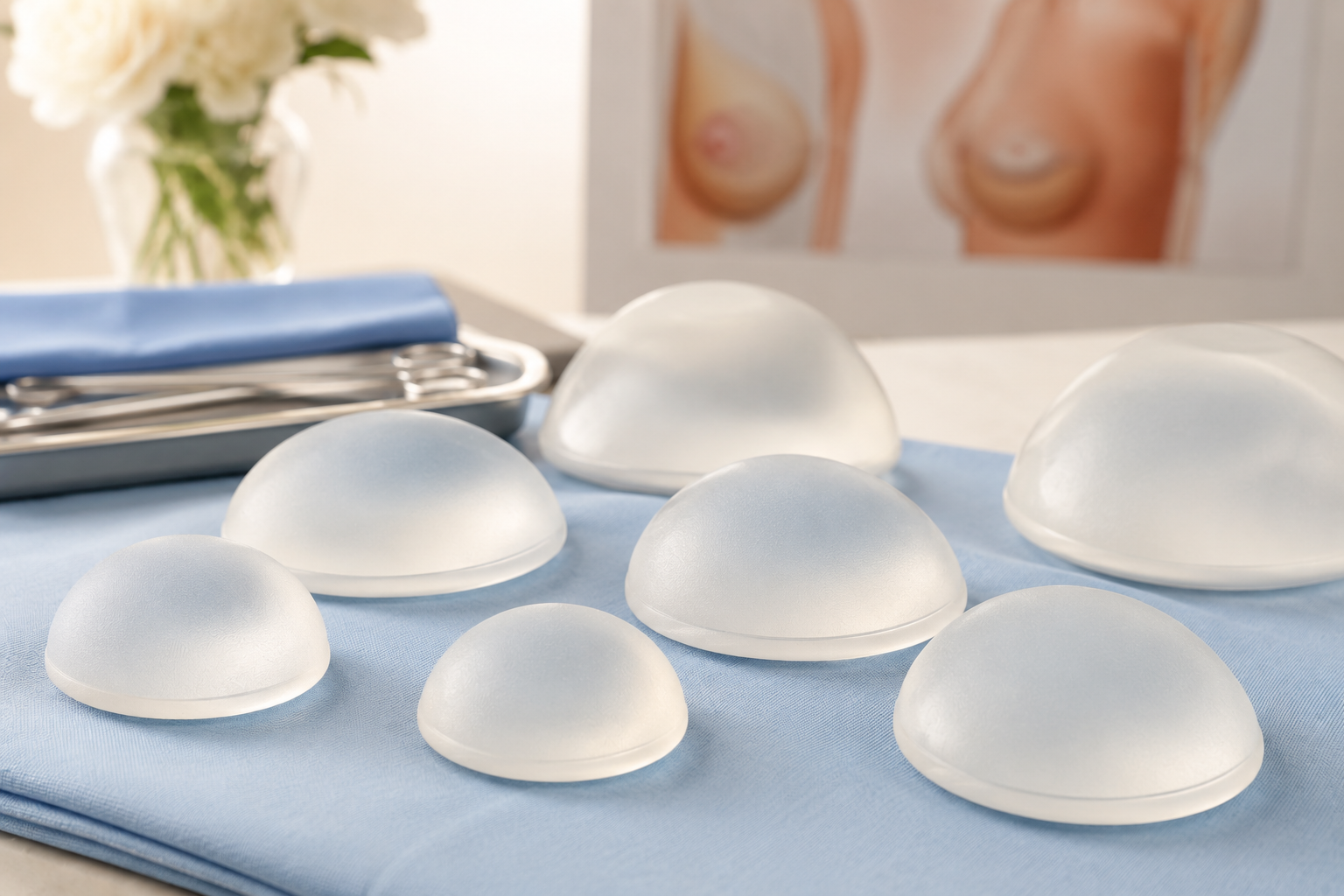
Sizer breast implant tools are trial devices, external inserts, or 3D imaging systems used before surgery to help patients visualize what different implant volumes will look and feel like on their own body. They give you a real preview of projection, cleavage, and cup size instead of asking you to commit to a number on a chart. At BodEvolve Cosmetic, we use a combination of external sizers, in-bra volume trials, and consultation-based measurements so the number you choose in the operating room matches the outcome you actually pictured.
Picking implant volume is one of the most personal decisions in the whole augmentation process, and it is also one of the easiest to get wrong when you rely on averages or celebrity references. A sizer takes the guesswork out.
What a Breast Implant Sizer Actually Is
The word “sizer” gets used for a few different things in a plastic surgery office, and the distinctions matter.
External sizers are silicone or gel-filled shells that slip inside a sports bra or fitted top during your consultation. You wear them, walk around, look in the mirror from different angles, and see how each volume changes your silhouette in clothes you brought from home.
Intraoperative sterile sizers are trial implants used by your surgeon during surgery. Before placing the permanent implant, the surgeon may test one or two sizes in the pocket to confirm the final volume matches the plan built during your consultation. These are single-use or fully re-sterilized between patients and never left in the body.
3D imaging sizers are software systems that photograph your chest and simulate what different implants will look like on your specific anatomy. They give you a rendered preview on a screen rather than a physical try-on.
Most patients experience the first type. The second happens in the operating room and is handled by the surgical team. The third is offered at some practices as an added planning step.
Why Cup Size Alone Is Not Enough
Patients often walk in asking for a specific letter, usually because a friend, a celebrity, or an internet reference set the expectation. Cup letters do not translate cleanly from one person to the next. A full C on someone with a 32 band looks very different from a full C on someone with a 38 band. Manufacturers also cut cups differently, so the same bra size shifts between brands.
Implant volume is measured in cubic centimeters, or cc. A 300 cc implant on a narrow chest will look larger than the same 300 cc implant on a wider chest, because the volume gets distributed differently. This is why sizers matter. Numbers on a page cannot show you distribution. A shell in a sports bra can.
A Rough CC to Cup Size Reference
There is no exact conversion between cc and cup size, but a rough guide helps orient the conversation before you try on sizers. On an average frame with a 34 band, roughly 150 to 200 cc adds close to one cup size. That means a jump from a size A to a size B usually sits in the 150 to 250 cc range, size A to size C tends to land between 300 and 400 cc, and size A to size D often falls between 400 and 550 cc. Size B to D generally needs around 300 to 450 cc depending on starting tissue.
These numbers shift on wider or narrower chest walls, which is why a size chart or online breast implant size calculator can point you in a direction but should never be your final answer. The most common breast implant sizes chosen in the United States sit between 300 and 400 cc, though the full range on the market runs from around 100 cc on the smallest end to over 800 cc on the largest. Volumes above 600 cc are less common and carry more long-term tissue stretch considerations.
Sydney Sweeney, Kylie Jenner, and other celebrities frequently referenced in size questions almost certainly work with surgeons who used the same measurement-first approach rather than picking a number off a chart. The volume that gave someone else the look you admire may not give you the same result on your frame.
How the Sizing Process Works at Your Consultation
Your first appointment focuses as much on sizing as it does on medical history. During the visit, we measure your chest wall width, the base of your natural breast tissue, the position of your nipple, and the amount of skin you have to work with. Those measurements narrow the field to a range of implant profiles, meaning how much projection each implant offers for its footprint.
Once we have a range, you try on sizers in a fitted top or thin T-shirt you brought from home. You see yourself in the mirror. You take photos. You compare two or three volumes side by side. This step often changes what patients think they want. Someone who walked in asking for 400 cc might realize 325 cc gives the exact look they wanted, or they might discover 450 cc actually suits their frame better.
The final decision belongs to you, informed by what your surgeon can safely and predictably deliver given your anatomy.
Factors That Shape Your Final Volume
Beyond the mirror check, several factors shape the recommendation your surgeon makes.
Chest wall width sets a natural upper limit. An implant wider than your chest can cause visible edges or long-term shifting.
Existing breast tissue dictates how much coverage you have over the implant. Thinner tissue means visible rippling risk grows with larger volumes.
Skin elasticity determines how much stretch the tissue can accommodate without settling problems later.
Lifestyle matters more than most people expect. Runners, weightlifters, and yoga practitioners often choose more moderate volumes because comfort during activity is a real consideration.
Long-term expectations count too. Implants are not permanent devices, and our guide on how long breast implants last explains why sizing choices influence when replacement becomes appropriate.
Common Sizer Mistakes to Avoid
A few patterns show up in patients who end up unhappy with their size.
- Choosing based on a photo of someone else without knowing that person’s chest measurements or implant profile leads to disappointment more often than not. The same implant on two different bodies produces two different results.
- Sizing up “just to be safe” because you are worried about ending up too small usually backfires. Larger implants stretch tissue faster and can create long-term settling and revision needs earlier.
- Skipping the mirror step because you feel awkward is another one. The five minutes spent trying sizes in your own top saves months of second-guessing later.
Only trying one size and one profile is the most common mistake. Bring more than one option into the fitting. Compare them. The difference between 50 cc becomes obvious once you see it on your body. Comparing yourself to plus size, petite, or athletic frames without accounting for your own measurements creates the same problem. Different breast implant sizes suit different bodies, and the right choice for you may look nothing like the reference photo that inspired the visit.
At-Home Sizing Methods and Sizer Kits
Some patients want to preview volume at home before their consultation. Several at-home breast implant sizer kits and rice test methods have gained popularity online, and they can be genuinely useful as a first step.
The rice test involves filling a plastic sandwich bag or knee-high stocking with a measured amount of uncooked rice, then slipping it into a sports bra. One cup of rice equals roughly 240 cc, half a cup equals about 120 cc. This lets you try different volumes with materials you already have at home. Wear the filled bags under a fitted top and see how the look sits on your frame.
Commercial sizer kits are silicone or gel inserts sold in matched pairs at graduated volumes. They feel more realistic than rice and let you compare sizes quickly. Both approaches share the same limitation, which is that external sizers sit on top of your existing tissue rather than inside the pocket where an implant will actually go. The real result will project differently and settle differently.
Use at-home sizing to build intuition and narrow your preferences before your consultation. Bring your findings to the visit. Your surgeon will then combine those preferences with your measurements to recommend a specific cc range and profile.
Fat Transfer as an Alternative to Traditional Sizing
Not every augmentation uses an implant. Fat transfer breast augmentation removes fat from another area of your body through liposuction and places it into the breasts to add volume. The sizing process is different because we work with the fat available rather than choosing from a catalog. Results are more subtle and volume gains are usually modest. If you want a natural feel and are not looking for a dramatic change, this may be worth discussing. Our comparison of saline vs silicone implants covers the traditional implant side in more depth.
Sizing With a Lift or Combined Procedure
If your breasts sit lower after weight loss or pregnancy, an implant alone may not deliver the result you want. A lift changes the position of the breast on the chest wall, and combining it with an implant changes how sizing decisions are made. In these cases, the surgeon plans volume around the new nipple position, not the current one. Patients considering this combination often review it as part of a broader plan such as a mommy makeover, which pairs breast work with tummy contouring in a single recovery period.
What Happens After You Choose
Once you and your surgeon agree on volume and profile, that plan gets documented and taken into the operating room. The intraoperative sterile sizers we mentioned earlier confirm the pocket accommodates the chosen implant cleanly before the permanent device goes in. This step protects the outcome and prevents surprises.
Recovery starts immediately after and follows a predictable arc. Our week-by-week breast augmentation recovery guide walks through what to expect, and if you are planning around a future pregnancy, our article on breastfeeding after breast augmentation answers the most common questions.
Cost Considerations Around Sizing
Sizing itself is part of your consultation and does not carry a separate charge at most practices. The final procedure cost varies based on implant type, profile, surgical facility, and whether a lift or other procedure is combined. Our page on breast augmentation cost breaks down the components, and if you are weighing this as part of a broader body plan, our overview of how much plastic surgery costs puts the numbers in context.
Cosmetic augmentation is not covered by health insurance, and our page on whether insurance covers plastic surgery explains the line between cosmetic and reconstructive coverage.
Making the Choice You Will Be Happy With Years Later
The best guide to picking your implant size is not a chart, a calculator, or a celebrity photo. It is your own reflection in a sizer, wearing your own clothes, in a consultation with a surgeon who has done this work often enough to know what will hold up over time.
Both Dr. Clayton Frenzel and Dr. Brian Holt are board-certified plastic surgeons who guide patients through this process daily. The goal is not the biggest number or the smallest one. It is the size that fits your frame, your life, and the version of yourself you want to see in the mirror ten years from now.
BodEvolve Cosmetic serves patients across Arlington, Richardson, Dallas, and Texarkana. Schedule a consultation to try sizers in person, review your measurements with a surgeon, and build a plan that matches the result you actually want.
Frequently Asked Questions
What is a sizer breast implant?
A breast implant sizer is a temporary, non-permanent implant your surgeon places during a fitting session (or sometimes lets you try on before surgery) so you can see and feel roughly how a certain size and shape will look on your body before committing to the real thing.
What is the most popular breast implant size?
There isn’t one universal “most popular” size since it really depends on body frame and goals, but silicone implants in the 300–400cc range tend to come up most often in surgeon consultations, landing many patients somewhere around a C cup.
How to make a breast implant sizer?
At-home sizers are usually improvised using rice or birdseed-filled bags, water balloons, or even sports bras stuffed with fabric, placed inside a bra to get a rough sense of volume — but these give you a general feel at best, not anything close to the precision of a professional sizing session.
Are implant sizers accurate?
They’re a helpful starting point but not perfectly accurate, since factors like your chest shape, skin elasticity, and how the implant sits under muscle can shift the final look — which is exactly why an in-person sizing appointment with your surgeon is more reliable than judging from a mirror alone.
