
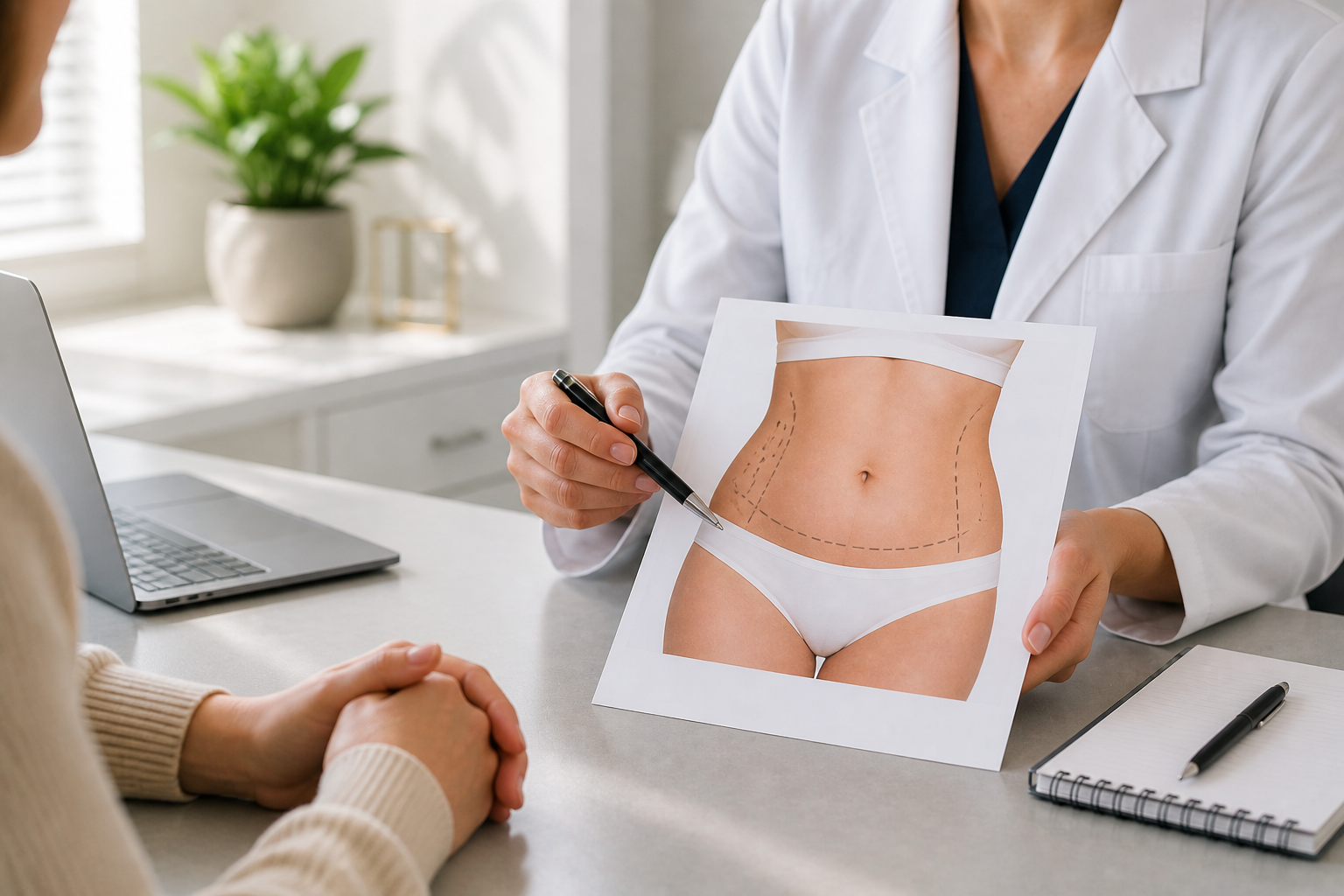
How to get a tummy tuck paid by insurance comes down to one thing: insurance will only cover the panniculectomy portion of the proceduree and only when excess skin is causing a documented medical problem like chronic infections, rashes, or difficulty with hygiene and movement. A standard tummy tuck that just tightens muscle and improves shape is still treated as cosmetic and excluded from coverage.
At BodEvolve Cosmetic, our board-certified surgeons work through this exact process with patients on a regular basis, reviewing medical history, writing letters of medical necessity, and handling prior authorization submissions and appeals, so this guide reflects what we’ve actually seen get approved, not just what the policy language says on paper.
Does Insurance Cover Loose Skin Removal? Understanding What Insurers Actually Look For
Before getting into strategy, it helps to understand the line insurers draw between cosmetic and reconstructive procedures. A standard tummy tuck that tightens muscles and removes excess skin purely for aesthetic purposes is almost always classified as cosmetic, which means it is excluded from coverage under virtually every major plan.

So does insurance cover loose skin removal at all? It can, but only when the skin is causing a documented medical problem. The conditions that most commonly qualify include chronic skin infections or rashes underneath a large skin fold, intertrigo that has not responded to months of conservative treatment, functional limitations such as difficulty walking or hygiene maintenance due to a hanging pannus, and in some cases, recurrent skin breakdown or ulceration.
The key word in every insurance policy you will read is “medically necessary.” That phrase carries a lot of weight, and understanding it early will save you a lot of frustration down the road.
How to Get Tummy Tuck Covered by Insurance: The Medical Necessity Standard
When insurance companies evaluate a claim for a panniculectomy or abdominoplasty, they are looking for clinical evidence that surgery is the only remaining option. This means your file needs to show a clear timeline of failed conservative care.
If you have been experiencing recurring skin infections beneath your abdominal fold, your records should show multiple visits to a primary care physician or dermatologist, prescribed treatments like antifungal creams or antibiotics, and documentation that symptoms returned each time treatment stopped. That pattern is what turns a medical history into an insurance argument.
If you are considering a procedure like post-weight loss body contouring or a stomach skin removal, the board-certified surgeons at BodEvolve Cosmetic can review your medical history during a consultation and help you understand whether your situation meets insurance criteria before you invest time in the appeals process.
Filing a Tummy Tuck Insurance Claim: What to Know Before You Start
If you’re searching for information on “tummy tuck claims,” you’re probably looking for one of two very different things, so let’s clear that up first.
If you’re trying to get your insurance company to pay for a tummy tuck or panniculectomy, that’s what this guide covers. It’s a coverage claim, and it lives or dies on medical documentation, proof that the surgery is treating a real physical problem, not just changing how your stomach looks. We walk through exactly how that process works below.
If you’re looking into compensation after a tummy tuck that went wrong complications, a botched result, or a surgeon’s error that’s a completely different process. It’s a legal negligence claim, not an insurance claim, and it involves a malpractice attorney rather than a prior authorization request. We’re not the right resource for that side of things, but it’s worth knowing the distinction so you don’t waste time on the wrong process.
Assuming you’re in the first group, here’s what actually happens once you file:
Your surgeon’s office submits your medical records, photos, and a letter of medical necessity to your insurance company as part of a prior authorization request, not a claim in the traditional “after the fact” sense. Insurance companies want to approve (or deny) coverage *before* surgery happens, not reimburse you after. That’s an important distinction, because it means all your documentation work needs to happen upfront, not after the procedure is already done.
Does Insurance Cover Loose Skin Removal After Major Weight Loss?
This is where things get more nuanced, and also where many patients have the strongest case. After bariatric surgery or significant lifestyle-driven weight loss, the remaining loose skin is not just a cosmetic concern. It can cause real, daily physical problems that affect quality of life in measurable ways.
Does insurance cover loose skin removal in these cases? The answer depends heavily on the amount of weight lost, how long you have maintained that weight loss, and the nature of the symptoms you are experiencing. Most insurance carriers want to see a stable weight for at least six months before they will consider approval. They also want evidence that the skin overhang is causing the medical issues, not just that it exists.
Procedures like a lower body lift, thigh lift, or arm lift may face similar scrutiny, though the criteria and success rates for insurance approval vary by procedure and plan. The BodEvolve team sees patients across the Dallas-Fort Worth region, with locations in Arlington, Richardson and Texarkana, and the surgical team regularly works with patients who are navigating exactly this kind of post-weight loss scenario.
How to Get a Tummy Tuck Paid by Insurance: Steps That Actually Move the Needle
Knowing how to get a tummy tuck paid by insurance is not just about having the right symptoms. It is about presenting your case in the right order, with the right documentation, to the right people. Here is what that actually looks like in practice.
Start with your primary care doctor. Before you approach a plastic surgeon, make sure your primary care records reflect your symptoms clearly. Your GP should be documenting the skin fold, any associated rashes or infections, and the treatments that have been tried. Insurance companies review these records closely, and gaps in documentation can derail a claim quickly.
Get a formal referral if your plan requires one. Some insurance plans will not consider specialist claims without a referral. Ask your insurer directly whether this applies to reconstructive plastic surgery in your case.
Request a letter of medical necessity. Once you consult with a surgeon at BodEvolve, they can write a detailed letter outlining the functional and medical basis for the procedure. This letter needs to include clinical measurements, symptom history, and a clear explanation of why surgery is necessary rather than a continued conservative approach.
Submit a prior authorization request before scheduling surgery. Never assume approval. The prior authorization process is where your case either gets approved or denied, and it is also where the quality of your documentation matters most. If you are denied, ask for a written explanation and request a peer-to-peer review between your surgeon and the insurance medical director.
For more information on how coverage works at BodEvolve, you can review their insurance and patient resources page before your consultation.
How to Get Tummy Tuck Covered by Insurance: What to Do If You Are Initially Denied
Denials are common and they are not final. Many patients who are denied on the first submission get approved after a proper appeal. Your surgeon’s office should be familiar with the appeals process, including the timeframes and the additional documentation needed.
If your first appeal is denied as well, you may have the right to an external review depending on your state. In Texas, the Department of Insurance has specific rules governing independent medical reviews, and patients have more options than many realize.
It also helps to understand that a panniculectomy and an abdominoplasty are not the same thing in insurance language. A panniculectomy, which removes only the hanging skin panel below the belly button, is more likely to be approved on medical grounds than a full abdominoplasty, which also involves muscle repair. Your surgeon may recommend staging procedures in a way that gives you the best chance of partial coverage while still achieving a meaningful outcome.
Is It Worth Pursuing Coverage?
How to get a tummy tuck paid by insurance is a process that takes patience and preparation, but for the right candidate, it is absolutely worth the effort. If you have documented skin complications, a history of failed conservative treatment, or significant post-weight loss changes that are affecting your daily life, you have a real case to make. The key is starting that case early, building your medical documentation consistently, and working with a surgical team that understands both the clinical and administrative sides of the process.
The surgeons at BodEvolve Cosmetic are experienced in helping patients across the DFW area navigate this path. Whether you are in the early stages of exploring your options or ready to move forward with a consultation, BodEvolve Cosmetic Surgery team is the best first step you can take.
